Memorial Day 2012

Nothing extra special here … just that I have not posted anything in a week and am feeling bad about that. I’ve got a bunch of stuff in the other blogs – EnfiladingLines.com especially – as there are a lot of 150th anniversary happenings right now. And I’ve continued to have more than a few Orioles opinions these days, as they are looking a bit more like themselves – having lost 6 of the last 8 games.

Not that these next three items tie together in any way other than I took pictures of each, here are some activities from today. <There are 3 events and 3 pictures>

We had an absolutely amazing storm on Sunday night – which cancelled our outdoor church movie event (and likely made the cranky neighbor across the cornfields happy). A wall of clouds moved in that was as equally impressive as anything I ever saw happen in Texas. I wish I had taken pictures, but I was too busy worrying about my trees blowing down. The wind effect (65 mph) upon even my largest trees looked much like the hurricane pictures you see of trees bent almost 90 degrees. I thought we got away with none coming down, but today I saw that a 60-70 foot tree on my south property line blew over into the neighbor’s yard. (Possession is 90% of the law they say, right?)  This was a grand old tree – so large that in our neighborhood covenant it is stipulated that the trees on the property lines cannot be cut down. This was one of them. Here is a picture:

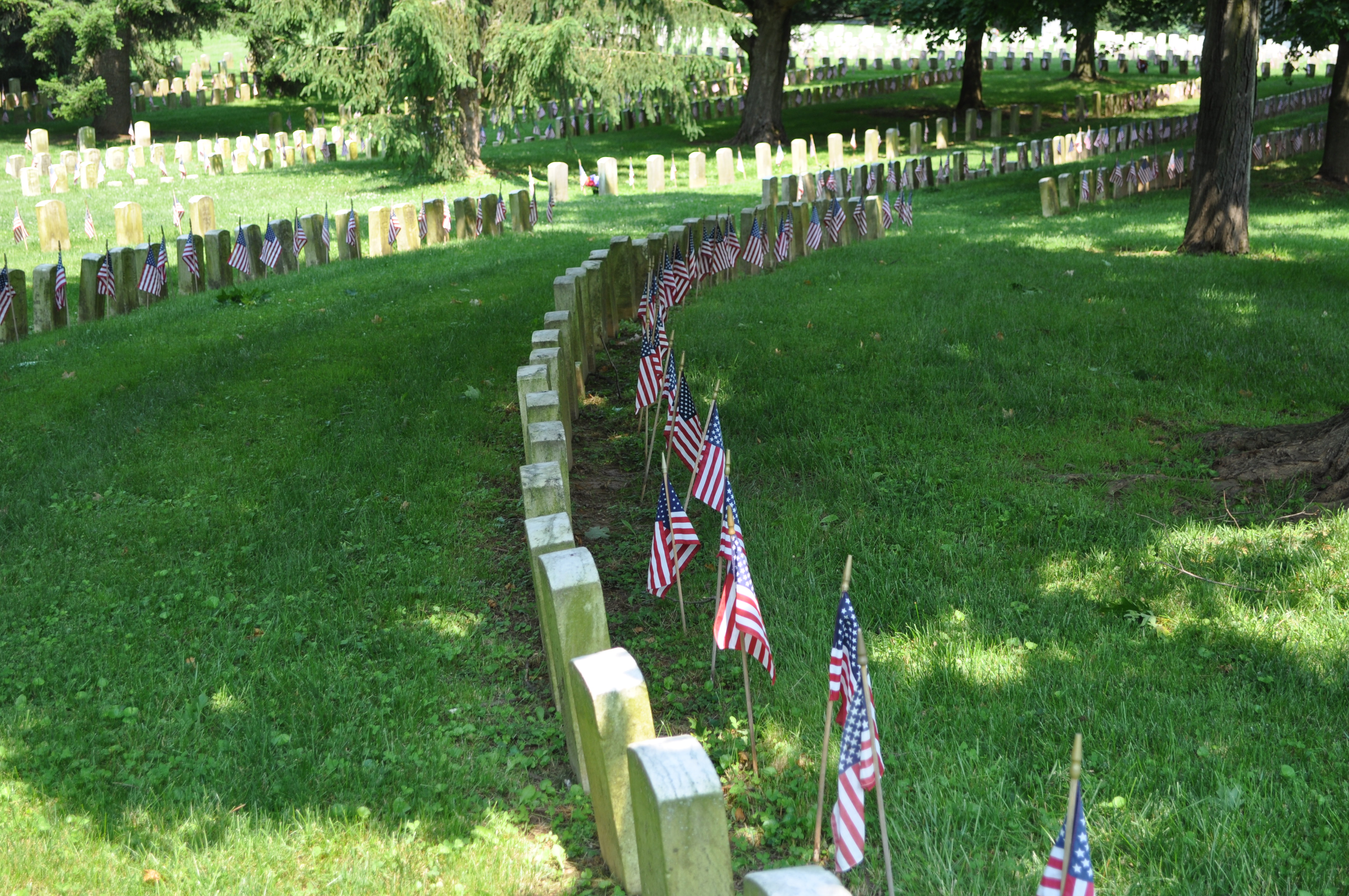
I thought that for sure I would be called to do a tour group at Antietam today, but that never happened. I did go over there however to walk along on a Ranger-led talk through the cemetery – which was very good. Even though at Tri-State this summer we are not highlighting the summer fellowship activities as in the past, since my Antietam events have been very popular, I’ll plan to do one of them toward the end of the summer. And I’m thinking of doing something like I saw today.

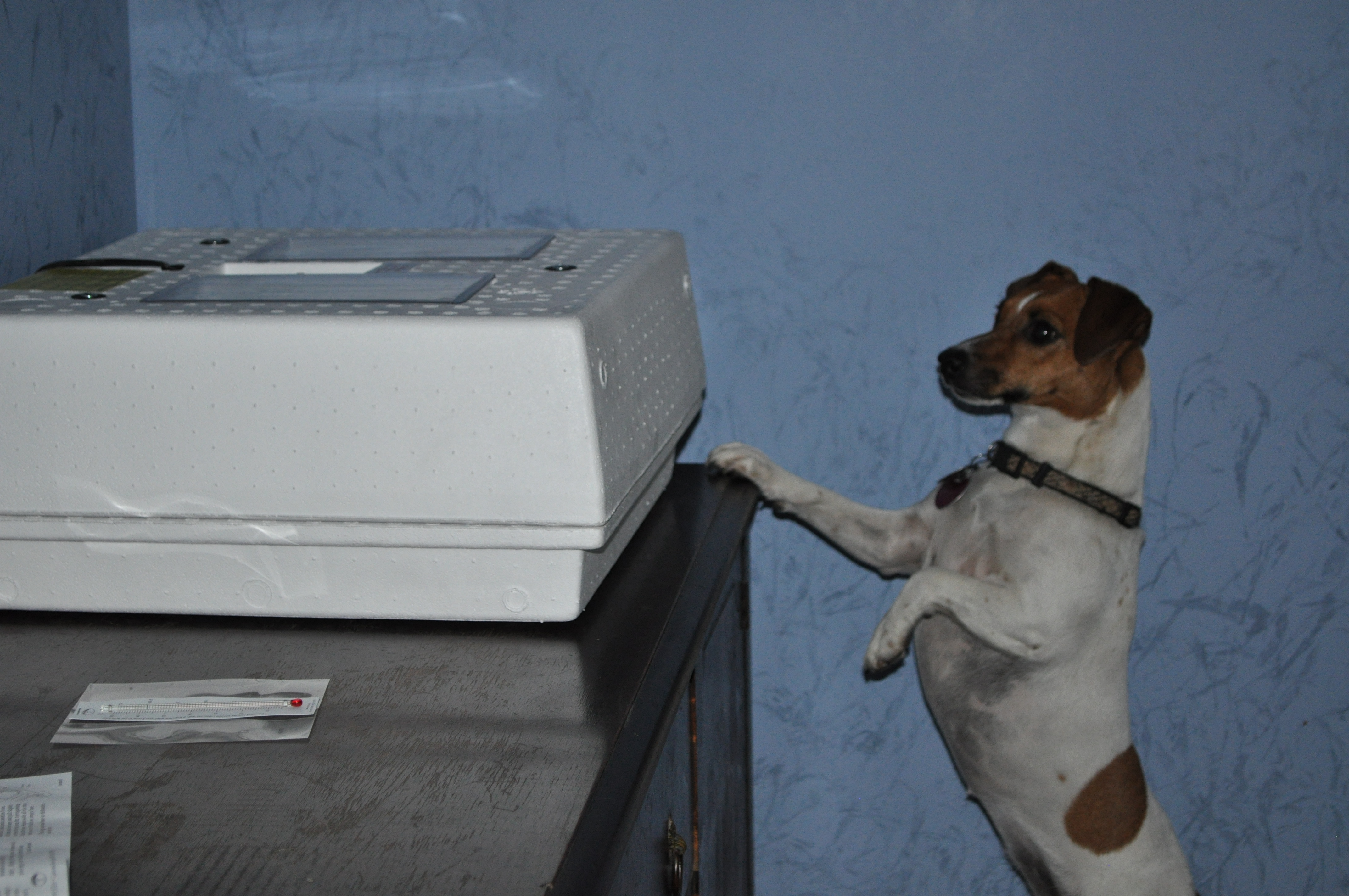
Since last summer, we have had a flock of chickens – we have 20 hens and 2 roosters. Caleb and I bought what is called a still air incubator and have had a batch of eggs in it for the past three weeks. The time has come for them to start hatching, and in fact, as I write this, the first one is out of the shell. It is quite an impressive thing – even this birth of a simple chicken is amazing. We’ve been hearing them chirping in the eggs for the past 36 hours. Unless you’ve experienced a clutch of eggs hatching, you will not likely be able to relate to how incredibly noisy this process is. They chirp and chirp – very loud!  And, as they’re trying to extricate themselves from their prison, the eggs go rolling loudly around the incubator on a metal mesh platform. The last time we did this was over 20 years ago when the older three boys were little, and I had the device in my bedroom – wanting to control curious little hands from doing the wrong thing. This time, remembering the past, I have the setup in a remote corner of the downstairs. And, all this noise is driving the dog crazy. Joules does not know what to make of this, and her curiosity is on high alert. Anyhow, let me know if you need some chickens.

What a Sweet Job!

What a Sweet Job!

As my local TSF friends know, I spoke at another church yesterday in Montgomery County. It is an Evangelical Free Church where there has been a recent pastoral departure. I’ve met some of these nice people in the past, and it was good to become reacquainted with them.

My host for lunch yesterday was one of the elders whom I had not met before, and he has the most sweet job on earth – in my humble opinion. Actually, he now leads a company where there are 80 people with the sweetest jobs on earth. It is a group that does historical research and writing for a variety of clients. Some of their research has been related to litigation situations – discerning the history of something to establish facts for either a prosecution or defense. Other clients have included the National Park Service – digging through historical materials. They have worked as well for corporations – who pay to see their firm’s history recorded and published.

So here is a guy who is one of the few people I’ve ever met who understands the salubrious experience of spending the day in the bowels of a library with white gloves while handling and digging through musty century-old documents that no human has looked at in years! So awesome! And then to discover some fact that is not known or something that overturns the generally accepted viewpoint on a particular subject – it is like being a detective without getting shot at!

This would be so much fun! You don’t think so?? Huh!  You’re boring!

The Crazy New Family

My previous post about camping set a new record for responses and blog hits – didn’t see that one coming. But thanks everyone for your kind words – most of them anyhow!

The anniversary occasion has caused me to think back over some of the early years when I knew Diana and her family. I guess I knew that I was likely in for a change from my childhood household, but I never imagined how different it would be. Having been adopted by grandparents and growing up as essentially an only child with older parents, many of the details of my life were significantly different than most kids – both positively and negatively.

Since my dad was a farmer in his youth, our family diet was a rather constant meat, potato, and vegetable at each dinner. It was very American and pretty much never ventured into anything more ethnic than Pennsylvania Dutch. I was well into my teenage years before I ever ate pizza, and when I went to college and saw lasagna as a menu choice, I had to ask others what it was! Diana’s family really did not eat that many unusual things – probably more items from a German heritage than I was used to – but any place beyond my home was going to be exotic by comparison.

Probably the biggest change was being exposed to a new family that was a do-it-yourself clan. It was often economics that drove them toward this, though there were talents and generational experiences behind it as well. My father always believed that there was a professional for whatever you needed done. You hired electricians, plumbers, carpenters, mechanics, etc. and paid them for the things you needed accomplished. My father was always annoyed also when “lay people” preached or taught in the church service, because that is what the pastors went to seminary to learn how to do … not to mention they were being paid to do it! So it was a case of “he who represents himself in court has a fool for a lawyer” on a grand scale!

But I was completely unprepared for the scale of do-it-yourself-ism that went on in Diana’s house. I was amazed to find out that her school teacher father had actually constructed the living room addition onto their home as well as refurbishing major sections of the home. He even did this really bizarre mechanical thing I’d never seen done – he changed his own oil and filters in their cars! I wasn’t even sure it was legal to do things like this all by yourself.

I quietly observed all these things and said very little … that is, until the Texas trip for the Christmas of 1976. This was the winter before Diana and I were married, although her older sister was married and had moved with her husband and baby to Dallas, Texas. There was some thought in my mind at that time that I might attend Dallas Theological after my college graduation in 1978 – still over two years away (although in those days, in order to get into Dallas Seminary, one had to apply 15-18 months in advance). So I was invited to travel there with the family over the holidays.

There was much family excitement because Diana’s older sister and husband had just bought a new home (new to them) – a rather sizeable ranch house. It was plenty nice enough but was not really new. The home would be enhanced by some remodeling, and I remember sitting in the kitchen listening to this family discuss what I thought were outlandishly crazy ideas. They glibly threw around ideas about knocking out walls here and there to open the floor plan, etc.  And I finally said, “What is wrong with you people? You can’t just knock down walls whenever you want to. You are all crazy. This house will fall down!”  They tried to tell me that it was no big deal – ranting on and on about “non load-bearing walls” or something of that sort.

I believe it was then that I began to get this sinking feeling that Bauder women (Diana’s family name – of four daughters, no sons) believed that the men in their world could and should be able to accomplish practically whatever creative endeavor their minds envisioned. After all, Dad could do it! And he could. He had to! Somehow he’d go off, maybe confer with his building brothers and come back and make it happen.

Famous Bauder women sorts of phrases:

“We could JUST knock out this wall and …”

“We can JUST move this family room over there …”

“That fireplace should really be on the other side of the room …”

“So we’ll put the sink where the stove is, move the stove to where the fridge is, and build in the fridge as part of the new cabinets …”

“Just take the roof off that part of the house and we can put two new bedrooms there…”

Wedding Anniversary and Camping Trips

Yesterday – the 14th – was a 35th anniversary for Diana and me. We were married soon after birth.

Whenever couples unite together, there is a coming together also of two family systems with varied ways of living life. I can see this is something of a challenge for my boys as they connect with the young ladies in their world. We’ve noticed a number of times that our family way of living and parenting has oft been vastly different than some of the girl-dominated families of their relationships.

And my family background was immediately very noticeably different from Diana’s!!  I may write a series of posts about this – which I think will be humorous especially for some of Diana’s relatives who read everything I write!  Just remember – I love you guys, no matter what I say over the next week!

Stimulating my thought to do this was the men’s retreat this past weekend – which was a camping event complete with snake visitations! (see previous blog post)

My family did not go camping. We had the good sense to take a vacation where you go somewhere nice and sleep in a comfortable place like human beings in the modern age! Diana’s family went camping – tent camping – the whole 9.99 yards! In fact, they loved it so much that one time they did it for an entire summer and went all over the entire USA.

So, when I met Diana, she was intent that I should learn this very wonderful family activity that had such warm and romantic memories for her. Being the compliant fellow that I am with such a benevolent heart to please, I did it. We even went camping for 10 of the 17 nights we took on our honeymoon trip to Florida and the southeast. We did a fair amount of camping trips with the boys when they were little, and even a couple of times since living here in Maryland. There was one particularly good trip to Acadia about a decade ago. But honestly, most of them were washouts – I mean that very literally – involving copious amounts of water falling from the sky. One time on Ocracoke Island, the people in the tent next to us were literally able to canoe around their campsite.

Well, back in 2006 when I had a two-month sabbatical, we included some camping nights in Yellowstone and the Mountain West as part of our trip to the National EFCA Convention in Denver. One evening in Yellowstone – in JUNE – it was simply too cold to sleep. There was frost on the inside walls of the tent. About 3:00 in the morning I looked at Diana in the dark and said, “Diana, I’m going to confess something to you that I’ve hidden from you for all these 29 years we’ve been married. I HATE CAMPING; I’VE ALWAYS HATED CAMPING; I only ever did it because I love you. But this is the end. I will never go camping again.”

And I haven’t … not for Diana … not for the men of the church. “Read my lips,” said George Bush 41 … “not gonna do it … wouldn’t be prudent.”

Prayers for Folks in the Community

Local people to the Hagerstown / Williamsport area are all aware of the tragic events of the death of two seniors in a car crash just after the annual WHS Prom Saturday night.

It was about 12:30 a.m. when Diana and I drove to pick up Caleb at the home of his girlfriend – since after midnight he is not able to drive on his provisional license. They had been to the Prom as well.

As we drove past the intersection of the road upon which the accident occurred (not far from Caleb’s girlfriend’s house), it was blocked off by emergency personnel. My mind went to the worst – what did indeed happen – and I recall either thinking or saying, “I hope there’s a fire down that road and not an accident with one of our high school kids.”

The teens are warned consistently about the dangers of this particular night. And that drumbeat of caution makes the actuality of the tragedy more surreal. Preliminary reports indicate that speed on a dangerously twisting road was the likely factor. Though everyone imagines substance involvement, there is no evidence or reason to believe that.

These were nice kids. I did not know the young man beyond name – knowing that he was a highly acclaimed baseball player in our school and county. I did know the young lady casually. She was a star volleyball player, and as such, during the Fall sports season would be in daily close proximity to my teams I coach. This was an extraordinarily beautiful girl with a great smile and kind personality.

As I write this on Sunday night, I’ve been numb about this all day – as I found out about it just minutes before the service at church this morning. I don’t even remember much about the worship set – it was a fog.

I grieve for these families and the entire Williamsport community, especially the great kids of the high school. Tragic events involving the death of classmates fall hard upon teenagers. I imagine that Monday will be a difficult day at WHS.

Our lives are a vapor – even those that get to live a long range of years. Psalm 90 talks about the relative span of a person’s life, and the Psalm comments that even at its longest, life is very short in comparison to God’s eternality.

30 Years Ago Today in Dallas

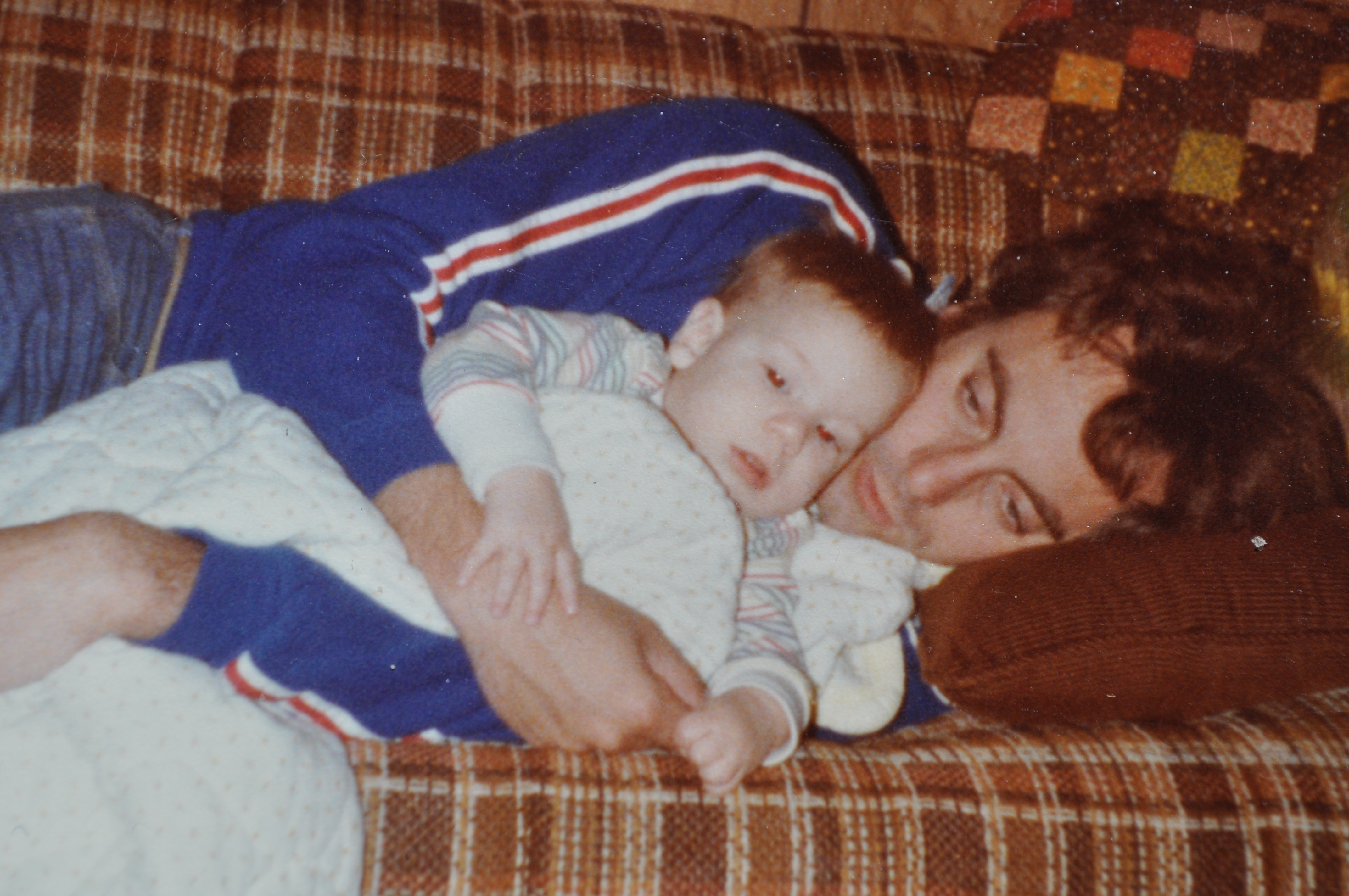
On this day in 1982 in Dallas, the first of my five boys was born. Nathan arrived in the early evening hours after a tense day of pitocin-induced labor … that was probably overly-administered and did more damage than good, resulting in a C-section baby.  (The other four boys were not … and that’s not a common story … but Diana is not a common lady!)

During the labor, to pass the time, Diana and I were playing a card game that involved quick hands and movements. She was connected to an IV, but still beat me – more proof (as all the boys will tell you) that she is actually the more competitive of the two of us!

After the decision was made to do the surgery and Diana was taken away, I thought they would come and get me, and only THEN start the procedure. NO!  I heard them say from down the hallway, “You can call the husband in now.”  So I figured they would say, “OK, everyone is here, so let’s begin.”  Nope, it was already well in progress as I walked around Diana, whose feet were toward the door. All I noticed out of my side view, as I went to my appointed place by her head, was a lot of red in her direction… and red on the floor. This whole childbirth thing really is very difficult on fathers, you know.

We had seen videos of C-sections in our child-birthing classes, and everyone in the video was having a good time – it was like a party! So we were unprepared when Diana said, “This really, really hurts!”  The anesthesiologist – a fellow a bit lacking in bedside manners – said, “You are feeling something? Honey, they just cut you wide open, I don’t think you are feeling anything!”

At that moment, Diana passed out and her head dropped sideways. The anesthesiologist went into a bit of panic mode. He said to me (about the breathing thing over Diana’s face), “Here, hold this in place, I need both hands.” And he began frantically turning dials and dohickuses. About that time I heard a cry from a few feet away, but all I was thinking was, “OMG, my wife just died!”

Well, as you know, she did not die … but by the time she awoke and we both realized we had a baby, a good several minutes had passed. This experience, along with several other elements, put Diana on a warpath to never have another C-section … and she didn’t!  (Diana is a tough dudette!)

As I went home that night, I remember being so in awe of the whole thing – a day which I recall all these years later as the most surreal experience of my life.

Nathan has been a great guy! He is truly one of the smartest people I’ve ever known. I did not think it was possible that there could be a less sentimental person than myself, but by comparison, Nathan makes me look like a writer for Hallmark’s collection of greeting cards for Valentine’s Day!

Nathan has brought some trauma to our lives! (as do most kids).  There was the cancer-that-wasn’t scare of 1996, the diabetes onset of 1997, and a number of terrifying low blood sugars since then. And one of the great joys of my life was to see him come back from those episodes to win gold medals in high school track and to run in college … and because he was a runner, he met his running wife on the cross country team at Dickinson.

Beyond that, we’ve got Bella and Hudson, and an enormous multi-national business empire – sort of!

Abner Doubleday, Baseball, and the 151st Anniversary of the Civil War

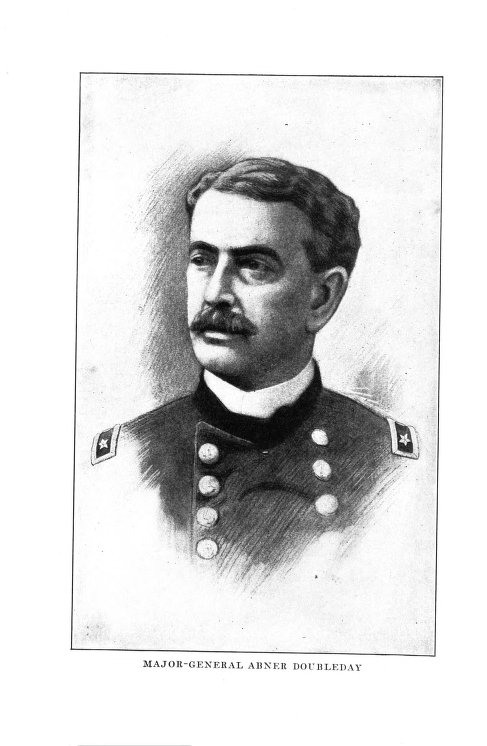
Today, April 12, 2012, is a sort of convergence point for a number of my most valued hobbies and interests. As a Civil War history enthusiast, it marks the 151st anniversary of the essential beginning of that 4-year struggle. The first Union shoot – a cannon blast from Fort Sumter in response to the Confederate attack in Charleston Harbor – was aimed by Captain Abner Doubleday, about whom I’ve written most of a book. And Doubleday was for many years considered the father of the great, great American game of Baseball – hence the location of the Hall of Fame in Cooperstown, NY.

So there is no way I can let this date go by without a posting on Doubleday and baseball. And since this writing is going to end up longer than most, here is the conclusion for anyone who can’t read to the end: Doubleday was an effective Civil War General who had nothing to do with inventing the game; he was more of a boy scout than a little leaguer; he would have demanded credit for it if he did invent it; baseball is more about evolution than creation; Doubleday may have only ever written the word “baseball” once in his life.

If I ever do get around to publishing my book on Doubleday, the baseball part of his story will be the shortest chapter. I knew when going into the project that the General had no serious connection, but no book on Doubleday could be complete without at least some explanation as to how his name got attached to the great American pastime.

Part of my research took me to the archives room at the Baseball Hall of Fame in 2005. A summer intern met me at the door and escorted me to the inner sanctum. There, an archivist, hearing what I was interested in researching, said to me, “I’ll get you the Doubleday file, but I’ll tell you right now there’s not much in it.”

Whereas Abner Doubleday would ultimately write extensively in the latter years of his life, a subject he did not address was the origins of baseball. But others surely have and continue to do so today. Though now largely discredited as the inventor of the game, he remains a sort of Paul Bunyan or John Henry folklore figure for the sport.Baseball’s founding is in fact more about “evolution” than “creation”—having evolved from a variety of bat and ball games played in American towns probably for even decades before Doubleday.

So how does an admittedly non-athletic, even somewhat portly person of military fame, who never claimed to be associated with a sport that had gained public and professional prominence long before his death, end up as the George Washington of the great American pastime? Only a convoluted storyline could yield such a result.

In 1905, sporting equipment manufacturer Albert Spalding determined it was in the public interest to establish definitively the origin of the great game of baseball. This baseball executive and former star pitcher assembled a group of like-minded associates to research the ancestry of the sport. The “like-minded” aspect of this group defined a joint hope that baseball was truly fully American, owing no connection to the English children’s game called “Rounders.”
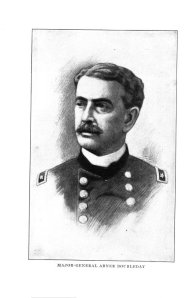
The chairman of the commission was National League President A.G. Mills. Other members included several men associated with the sport, and two United States Senators. A vast amount of communications came to the committee, including a letter from an Albert Graves, a mining engineer in Colorado. Graves claimed to be a Coopersburg boyhood friend of Abner Doubleday, and said that the Civil War General in 1839 devised a scheme for changing the game of “Town Ball” to include a diamond formation, four bases, and a certain number of players with specific positions.

The final report of the commission was issued on December 30, 1907, and concluded that “the first scheme for playing baseball, according to the best evidence obtainable to date, was devised by Abner Doubleday at Cooperstown, N.Y. in 1839.” The notion of the game being invented by an all-American war hero native of New York State caught on with the public.

Almost immediately, there were those who disputed the findings by noting that the alleged Doubleday innovations were in wide use prior to 1839. But their voices could not compete with the official version of the commission, and the identification of Doubleday with the sport was permanently cast. Added to this was the 1934 discovery of an old baseball inside a trunk in the attic of a home having some connection to the Doubleday family. The ball became known as the “Doubleday Baseball.” Stephen Clark, a Cooperstown resident and philanthropist purchased the ball for five dollars and displayed it with other baseball items in a room of the Village Club. A business partner of Clark, by the name of Alexander Cleland, proposed the idea of a National Baseball Museum. National League president Ford Frick and other baseball executives supported the proposal, and before long a supply of baseball memorabilia began to collect in Cooperstown.

In that there was to soon be in 1939 a centennial anniversary of the declared invention of the sport, Ford Frick and other baseball executives proposed that a Hall of Fame be created to honor the great players of the game. The Baseball Writer’s Association of America was tasked with the selection of those from the history of the sport who should be the first honorees. Five famous players were selected: Babe Ruth, Honus Wagner, Ty Cobb, Christy Mathewson, and Walter Johnson. A total of 25 players were elected by the time of the grand centennial celebration in 1939.

Due to the publicity of the Hall of Fame being established, a new round of investigations and assertions by baseball historians proved the Doubleday connection to the founding of baseball to be a myth. The fact is that the game has a variety of roots—not only to the game of Rounders, but also to a wide assortment of bat and ball games played in towns for decades before the alleged incident in Cooperstown in 1839. An individual name more justly appropriate to associate with the “creation” of baseball is Alexander Cartwright, who in 1845 published a set of baseball rules that were widely adopted. Associated with the earliest forms of professional baseball clubs, particularly the New York Knickerbockers, the first recorded game was played in 1846 in Hoboken, New Jersey. The National Association of Base Ball Players was the first organized league in 1858.

In recent years, other discoveries of early forms of baseball have been uncovered—most notably a Pittsfield, Massachusetts bylaw from 1791 that prohibits the playing of baseball within 80 yards of the windows of a new town meeting house.

Part of the debunking of the Graves claim is that he was roughly 14 years younger than Abner Doubleday—though Doubleday did have a cousin with an identical name who was the same age as Graves, and lived in the same community. The incident Graves recalled may well involve a mistaken identity. Such a scenario as Graves penned was surely the mere replication of events in many locations where boys shared their knowledge of the growing codification of the rules of the game. Doubleday was nowhere near Cooperstown in that summer of 1839. And were Abner Doubleday the inventor of the game, he would have never allowed the issue of the origin of baseball to be disputed to the extent that it was in his lifetime, without taking claim for its beginnings. Doubleday had a highly advanced sense of justice and credit—so much so that it became problematic for him in his late Army career. He never claimed credit nor mentioned any affection for the sport in his many writings; and nothing is said upon the matter in his obituary or remembrances written by others who knew him.

One reference actually does exist of Abner Doubleday penning the word “baseball.” Near the end of his military career in 1871 he was stationed at Fort McKavett, Texas as the colonel in command of the 24th U.S. Infantry Regiment. This was one of four army units that were entirely African-American. To the Army’s Adjutant General in Washington he wrote:

“I have the honor to apply for permission to purchase for the Regimental library a few portraits of distinguished generals, Battle pictures, and some Rogers groups of Statuary, particularly those relative to the actions of the Colored population of the south. This being a colored regiment, ornaments of this kind seem very appropriate. I would also like to purchase baseball implements for the amusement of the men and a Magic Lantern for the same purpose. The fund is ample and I think these expenditures would add to the happiness of the men.”

Referring to bats, balls and bases as “implements” hardly sounds like the vocabulary of the founder of the sport! The Rogers Groups of Statuary referenced a very popular form of durable plaster sculpture. The images pictured ordinary people performing ordinary deeds of life—depicting amusements, social customs, literary topics, historical figures, etc. The statues varied in size from eight inches to forty-six inches. Practically anyone of means in Victorian America possessed them, and the announcement of a new issue was cause for much publicity. The social interests and educational concerns of Doubleday may be seen in this request for the benefit of his regiment. The “Magic Lantern” was the name of an immensely popular 1870 invention that may be thought of as the ancestor to the modern slide projector.

Though Doubleday would surely prefer to have been remembered for his military accomplishments and his advanced sense of social justice, he has instead been remembered more for the sport of baseball, and Cooperstown, New York. It has frequently been said that if baseball was not invented in Cooperstown, it should have been. Cooperstown is the classic All-American town—with tree-lined streets of Colonial and Victorian homes, and a Main Street of storefront shops and merchants. Situated on the south shore of Glimmerglass Lake, the town reverberates from an enchanted past. Beyond what Abner Doubleday’s dubious legend has brought to the community, it factually stands in memorial to the life and work of James Fenimore Cooper—the famed author of The Last of the Mohicans, and the son of the founder of the town. The natural beauty of the lake, woods, and mountains easily conjure the settings for Cooper’s Leatherstocking Tales about Indians, settlers, pioneering, and wild animals.
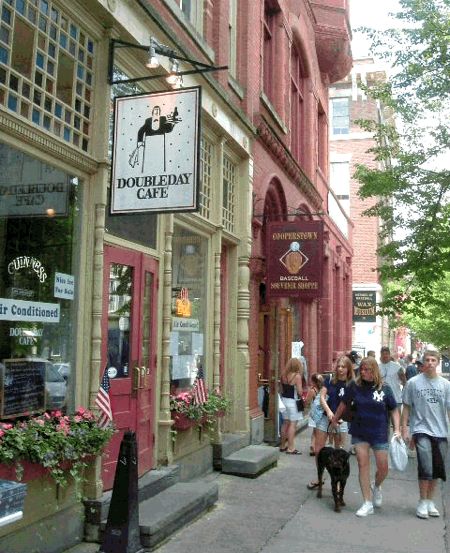
But James Fenimore Cooper does not even get to first base compared to the plethora of acknowledgements of Abner Doubleday in Cooperstown. The brick ballpark built in 1938-1939 in Phinney’s Pasture (the actual location of the alleged moment of creation) by the Work Projects Administration is named “Doubleday Field,” and serves as the location for a yearly exhibition game between two professional teams. Nearby are the Doubleday Batting Range and the Doubleday Club House Shop full of souvenirs. The visitor may enjoy an ice cream cone at the Doubleday Dip. For a meal, there is the Doubleday Café, complete with a large, framed, crude drawing of a corpulent Abner Doubleday in military garb holding—not a sword or revolver—but a baseball.

The Baseball Hall of Fame is the frequent brunt of criticism for making too much of this spurious heritage, and thereby perpetuating it. The fact remains that the legend, though now proven devoid of substance, did account for the location of what has become a major museum and library attraction for visitors from across America and around the world. The legend, as a story, must be embraced. Indeed, the Hall of Fame writes that the events recorded by Abner Graves “capture that point in time when rapid changes in the game of town ball arrived in one typical American community and caused a minor revolution on the sandlot.”

Summary

Abner Doubleday did “throw out the first pitch”—but not in the game of baseball. Rather, it was the first salvo of the Civil War at Fort Sumter in South Carolina. As political columnist and baseball fan extraordinaire George Will notes:

Precisions about origins is appropriate in the national pastime of a nation that knows precisely when it got going: July 4, 1776. Not that there hasn’t been a rhubarb about that. Lincoln at Gettysburg in 1863 made a point of pinpointing the nation’s birth fourscore and seven years earlier, at the Declaration of Independence. He did so because some wily Confederates were arguing that the country came into existence in 1789, with the ratification of the Constitution, which was, they said, a compact among sovereign states that therefore retained a right to secede.

Lincoln had sound reasoning and, more important, the bigger army, so his view prevailed. It did so with the help of General Abner Doubleday, who, before he fought at Antietam, Fredericksburg, and Gettysburg, fired the first shot in defense of Fort Sumter. So in a sense he really did start something. Just not something as important as baseball.  <<George F. Will, Bunts, (NY: Touchstone, 1998), 273>>

Who’s Your Daddy?

I’ve often heard it said that the dangerous thing about researching your family history is that you might not like what you find out!

As many of you know, I’ve got a bit of a convoluted background – having been adopted by my maternal grandparents. So I do know a lot of the family history on that side, and it is a mixed bag of some rather odd characters, along with an amazing history that traces back to the very founders of the Protestant Reformation.

However, I never met my biological father (who passed away in 1979), even though he lived very near to where I was for the first 22 years of my life. About 1977, I called him on the phone one day and asked to meet, but he said he did not want to. And that was my only conversation ever with him … took about 3 minutes. Though he was a leading personality in the community, I guess he had a boatload of personal problems and ghosts.

I have many times in the pursuit of my Civil War research and writing dug up original source material on various people, so I put some sleuthing skills to work recently on tracing my biological past. I’ve only made it back to 1855 and have already hit a dead end – not able to explain why my great-grandfather in 1860 was a five-year old who was living with people of a different last name.

It is all very weird to not know your father or where you’ve come from. Maybe that is why the concept of a “spiritual, heavenly family” means much to me and is such a part of my dialogue about the church family. We are related through our father God and our brother Christ – who has paid the price that we may be adopted into the Family – that organic body of faith which we get to begin to experience on earth, and will experience perfectly in the beyond. God does not hang up on our calls to him!

Concerning our adoption into God’s family, it says in Romans 8:14,15: “For those who are led by the Spirit of God are the children of God. The Spirit you received does not make you slaves, so that you live in fear again; rather, the Spirit you received brought about your adoption to sonship. And by him we cry, ‘Abba, Father.’”

Anyhow, in my research I found the following picture from a 1934 yearbook. See if any of you can ID which one is my natural father (I’ll give the answer under the picture). Haha – it sure is a happy looking group isn’t it?  It is a picture of the local chapter of the “Thesbian Society.”  My father was very involved in musical theatre over his whole life, and was often the leading actor in productions. The organization was very similar to our local Potomac Playmakers. If my mother had lived to see me play “Herr Victor Schwab” or one of my other Christmas Show roles, I know what she would have been thinking about my heritage.

OK… he is the guy in the front row. For this school year, he was the president of the society or the leading person or some such thing – I forget what the caption said. This was in a school in Easton, PA called Wilson High School.

Baseball is Back – It’s a Good Friday!

Yes! This is how I know summer can’t be far away. Baseball starts tomorrow on Good Friday – so, it is a good Friday! It is the resurrection of all that is good in America. As the song goes: baseball, hot dogs, apple pie, and Chevrolet! I even have me a new Chevrolet! (New to me, that is … it’s a 2002 – the newest car I’ve ever owned!).

I know, I know… some of you out there think baseball has all the action of dung beetles working over a cow chip. As I always say, it is the thinking man’s game – free of thugs running up and down a court and HGH-induced monsters inflicting life-debilitating brain damage upon one another.

I know, I know - no matter how much lipstick you put on it, it's still a Baltimore Oriole!

There is a surprisingly high number of Christians in baseball. Much of this is credited to the very good chaplaincy ministry that goes on at most minor league locations. Guys in the minor leagues are often very open to hearing about the larger issues of life. It is difficult to “make it” … even for those with a big ton of talent.

As I’ve written before, unlike football and basketball professionals who were stars all their lives in high school and college, professional baseball players all start at the bottom and have to work their way to the big leagues. We saw it last year with the Nationals top draft pick – Bryce Harper – who played half of the season in Hagerstown. And the Orioles top pick this year – Dylan Bundy, who is a recent high school grad who throws 100 miles per hour – will be starting at DelMarVa (Salisbury, MD).

Anyhow… Orioles fans – you can follow my Orioles blog on the page called BirdsWatcher.com … and I’ll have other less intense postings at my former Orioles blog at www.osayorioles.mlblogs.com.

Rite of Passage / It Will Fix Itself

A Rite of Passage

After five boys spanning a total of 13 years, there are multiple times through the same experiences as a parent – like the last kid in little league, going through graduations, etc. Of course, one of those recurrent parental experiences is teaching your kid to drive! As of yesterday, we are now completely finished with that process. The last boy passed his driver’s test.

I honestly thought this driving thing would come more naturally to the boys than it did, but it is a long process. And the ordeal is especially long in the state of Maryland, with varied requirements for the permit and classes, along with the great joy of many trips to the Motor Vehicle Administration. That is not a place known for customer skills, but I can tell you this – they are a dream compared to their counterparts in New Jersey.

The process is so long, difficult, and complicated, that it totally amazes me as to how ANY illegal aliens are able to get a driver’s license. It was hard enough to do while speaking English; I can’t imagine how difficult it would be for someone with a foreign language. Yet somehow, thousands of them manage to get it done. I understand there is quite an elaborate black market for such – there would have to be.

It Will Fix Itself

I had an experience today that reaffirms my view about mechanical things – if you ignore a problem long enough, it will fix itself.

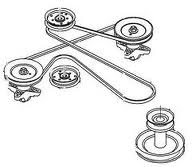
My belt assembly was far more complicated than this one!

My garden tractor had the very long and complicated mower deck belt break last year. I found a replacement belt and did the repair – TRULY, the MOST advanced mechanical thing I’ve ever done in my life!!  It worked great – for a while. Then, one day after one of the boys used the tractor, the tension was weak and the blades turned poorly. I had to cut grass very slowly in order to keep the blades from choking. So ended the summer of 2011.

Now, with grass needing to be cut again, I got the tractor motor started after a great deal of fussing with it (again, something about which to have great mechanical pride!), but as with the end of last season, it worked poorly and I could tell the tension was weak.

But somehow, while cutting today, I began to realize the tension in the belt was back and the power was taking me through the grass like a hot knife through butter. I cannot explain it. But once again, rather than getting it fixed – given enough time, it fixed itself.